Showing posts with label Design. Show all posts

The OpenStack Architecture Design Book Authors Speak

In the OpenStack Design Summit I asked the authors the same 5 questions in order to get their thoughts and feelings on OpenStack, the community and the future.
  1. How many years have you been working with OpenStack?
  2. What is your favorite thing about OpenStack?
  3. What is that you dislike about OpenStack?
  4. If there was only one thing you could change/improve in OpenStack - what would it be?
  5. Where do you think Openstack will be 3 years time?
Here are their responses.
Beth Cohen, Cloud Technology Strategist – Verizon
    1. 3 years.
    2. It is a strong community of companies and people who want to build the best cloud platform in the world.
    3. It is a bunch of petty developers snipping at each other from their little fiefdoms.
    4. Better integration of the parts.
    5. Everywhere!
Sean Winn, Cloud Services Network Engineer – CloudScaling
    1. 2 years.
    2. I love that OpenStack is an open-source, community-developed system which, when leveraged properly within an organization, can have tremendous impact on every aspect of how that company does business. The effects of OpenStack on business operational efficiency and agility are incredible to me.
    3. Lack of cohesiveness between projects is one of the biggest problems that I see facing OpenStack. Features are sometimes developed without consideration of other OpenStack projects implementations of same or similar features.
    4. More cooperative efforts between projects to develop features with parity.
    5. The most widely deployed data center and cloud solution.
Kenneth Hui, Business Development Manager, Cloud Solutions – EMC
    1. 2 years.
    2. The collaborative nature of the community.
    3. Lack of focus in terms of development. Too many people chasing the newest shiny thing.
    4. Better product management.
    5. Leading private cloud platform.
Nick Chase, Technical Marketing Manager - Mirantis
    1. 2 years.
    2. The "open" nature of OpenStack means that anybody can get involved, and anybody can make it do what they need it to, if they are willing to put in the work. The possibilities are endless, and I'm passionate about that.
    3. I'm sure there's much that I "dislike" exactly, though there are some things I wish worked better, or were easier to use. Deployment could be a little easier, of course.
    4. Public perception. :)
    5. Complete convergence so that hybrid and multi-cloud are not just normal but transparent.
Kevin Jackson, Principal Cloud Architect – Rackspace
    1. 3 years.
    2. The fact it's an open source, globally collaborated project that is the first choice when discussing cloud technologies that you can deploy yourself.
    3. Release cycle of 6 months with very little support at present to easily upgrade to match this cadence.
    4. Neutron/Networking - we need to quickly move on from the "Nova-network" vs "Networking" discussion ASAP.
    5. We'll see "OpenStack Compatible" stickers on hardware and software showing ease of integration with the standard privately deploy cloud software.
Anthony Veiga, Senior Network Engineer - Comcast

    1. 2 years.
    2. The flexibility to plug the parts I want and omit the parts I don't. Plus, it's open source so I can't parts I need (which my team has done a lot of).
    3. I dislike the primarily vendor-driven nature of its development. More users need to get involved, and the Foundation should recognize that coders aren't the only contributors.
    4. Add community processes for locking out intentional roadblocking.
    5. A multi-billion dollar per year industry.
Sean Collins, OpenStack Developer – Comcast
    1. 2 years.
    2. Being able to make design decisions that affect the entire company I work for.
    3. Gerrit, Nitpickers.
    4. Nitpickers.
    5. Probably where it is currently.
Vinny Valdez, Principal OpenStack Enterprise Architect - Red Hat
    1. 1 year.
    2. I particularly enjoy how expansive, dynamic and flexible all of the projects yet they all come together in unison.
    3. Many concepts sound great in theory but are not always proven or tested.
    4. Move everything to MongoDB.
    5. The de facto standard way to run applications.
Alexandra Settle, Technical Writer – Rackspace

    1. 1 year.
    2. The community involvement and dedication everyone has to the project.
    3. Unfortunately the documentation is not up to the greatest standard it could potentially be. This however is an ongoing project and I hope to see it through.
    4. Documentation.
    5. Hopefully still progressing. Lots of community based projects die once a 'bigger and better' project is introduced.
I would like to thank all the authors for an amazing week in San Jose – and amazing experience – and an amazing outcome.

The OpenStack Architecture Design Guide Story

Over 6 weeks ago I posted that I was going to embark on a journey, another book journey, and this time it was an OpenStack one.

Go ahead and read the post OpenStack Design Guide Book Sprint.

I have been wanting to write this for a while – but so much has been happening – that I just have not yet got around it until now.

I first would like you all to visit these two posts:

As were the others, I was also skeptical about if such a process was even possible – but it was and I find it was actually a great success.

Everyone I have spoken to since the sprint was surprised that you actually can write a book in 5 days, it just shows that with a group of dedicated, task driven individuals – that have a deadline, and a common goal, it is possible.

So how did it actually work?

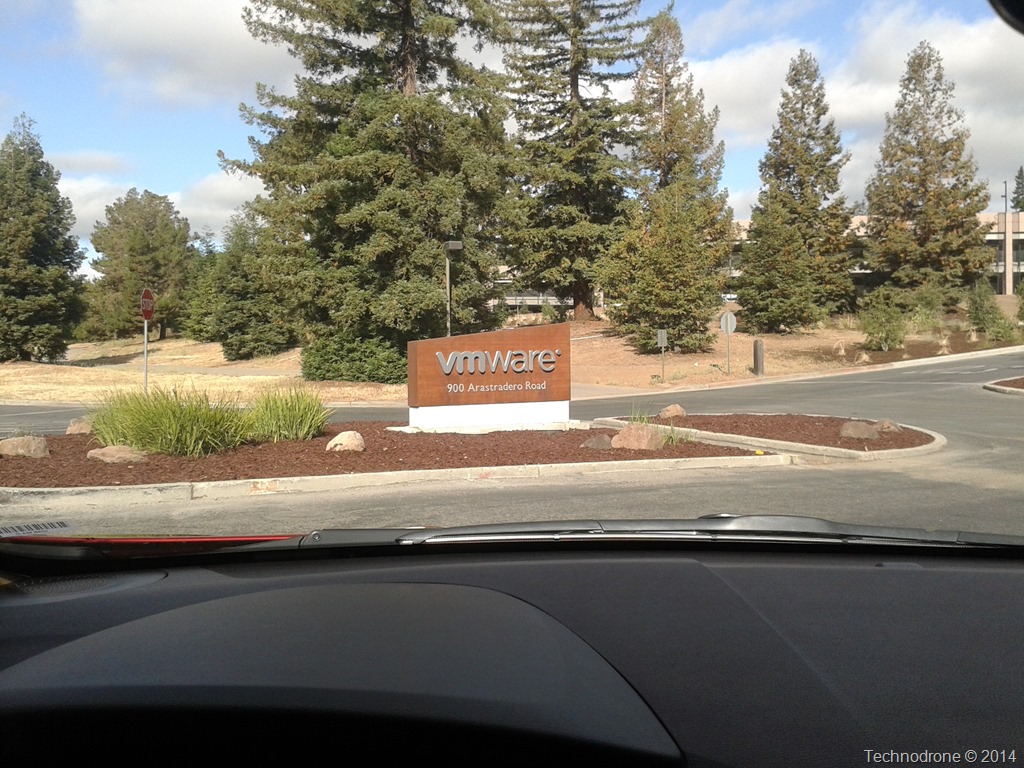
VMware (thanks to Scott Lowe) was kind enough to host us for these five days.

VMware Mothership

It was the first time I had actually been to the VMware campus – so this also was a first for me.

The diversity of the people involved was – I think – a good mix. There were Networking people, Openstack people, Architects, Storage Architects, Writers, Infrastructure Administrators, Project managers, a bit of everything. Each of us had input from a different aspect into the content that was going to go into the book and how it would be written.

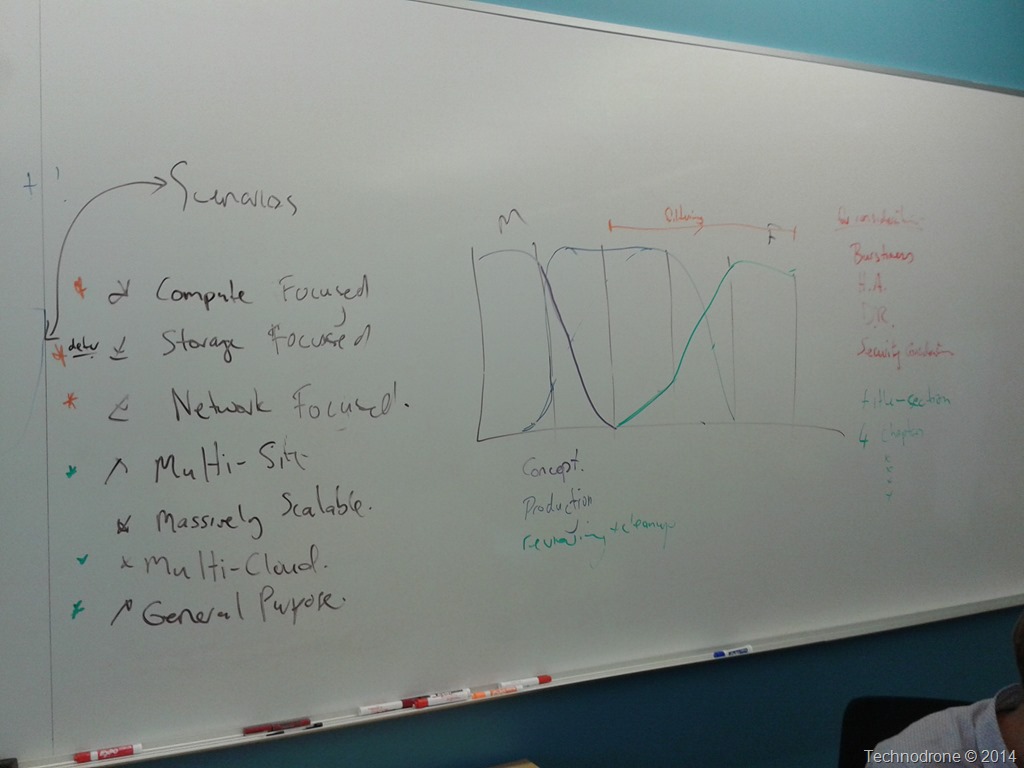
The first day was mostly dedicated to the book structure, what the content should be about – who the audience should be, layout and such.

Scenarios
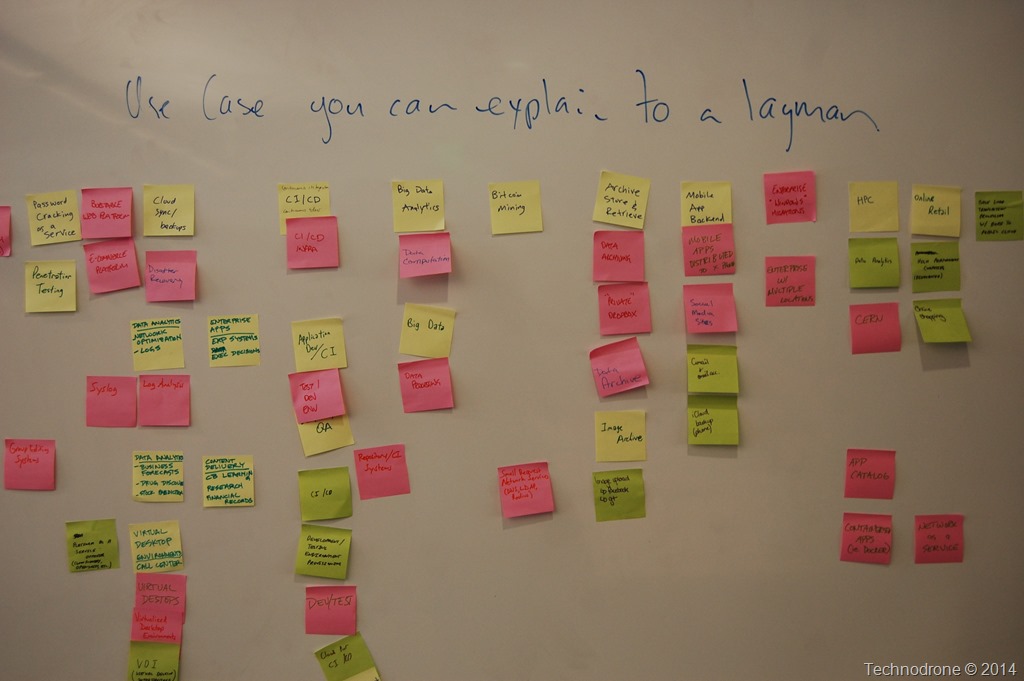
Lots of Notes

A good amount of brainstorming, discussions – getting to actually know each other – because not everyone was acquainted with everyone else.

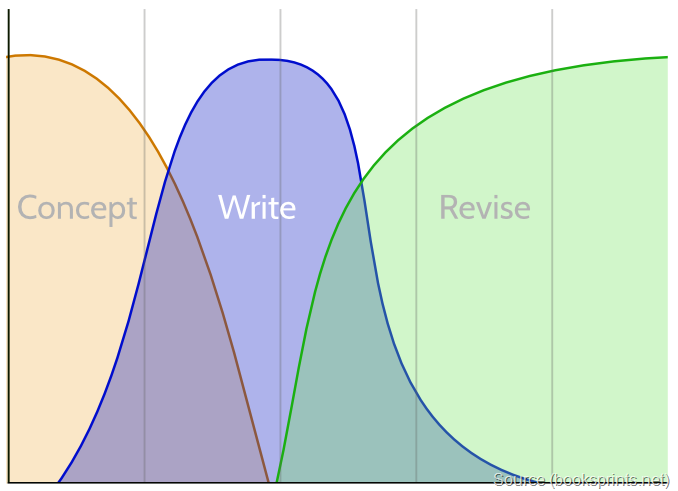
The graph on the picture above is actually better explained here

mapping

Each of the vertical lines is a day. As you can see the concept of what actually goes into the book is mainly done on Day 1 and a bit on Day 2. On Day 1 you also start creating the content where most of it is done on Day 2-4 – where at the end of Day 4 – almost all of the content is actually done. Revision starts on Day 3 and continues all the way till the end. And this exactly how it went.

We broke up into groups that would do the writing according to chapters. At first discussions in each group – what should go into the chapter, then high-level chapter points and then after that churning out content.

We had some problems with the software that we used, mainly because the majority of us are used to having tools where you can collaborate simultaneously on the same document (Google Docs or Etherpad) and here we were limited to one person on a section at a time. We found the middle ground of working with all of the above and synchronizing content – that allowed us all to work efficiently and keep the flow of the Sprint going.

I expected there to be some bottlenecks along the way – due to the fact that in order to have the book come out as though it was written in a “single voice” – it needed to go through what Adam (our moderator) called a “filtering process”. That mean it needs to go through one or two people that will organize the content with the same narrative, line of thought and style. And evidently that is what happened towards the end

Obviously we had different writing styles – so adaptations needed to be made along the way.

And so we trudged on – writing, editing, creating diagrams, and re-editing.

The combination of the constant supply of caffeinated soft drinks, M&M’s and other sugar saturated stuff, was about enough to get us through the sprint.

Getting to the end of Friday with checkmarks across the board was a very satisfying feeling.

All Done!

I had a great time, a wonderful experience. Out of all of the participants I had only ever met Scott Lowe, all the others were either through interaction over Twitter or other means, but not in person.

It was a enlightening experience, very satisfying and something I would definitely do again if I have the opportunity.

I hope my co-authors can forgive me for the Kosher food they had to eat during the Sprint – I must say home-made cooking (especially my wife’s) is a lot better than what we all got. So whenever you guys are are in Israel for a trip – I will be happy to invite you all for a home cooked meal.

And now for the finished product.

The online version…

Online version

Paperback – from Lulu.com

Paperback

You can browse through a full set of pictures taken at the event here.

All the authors have proposed a OpenStack Summit Session for the upcoming Paris Summit -
The OpenStack Design Guide Panel – please feel free to cast your vote!